You idle out of the marina on an August morning, engine barely above a putter until you clear the no-wake stretch along the seawall, and somewhere in the back of your mind is a vague idea that manatees are a winter thing. A Florida thing. Something that happens on the news in January, when a cold snap sends a few hundred of them crowding into a power plant discharge canal near Tampa. That mental picture is not wrong, exactly. It is just built from the wrong season.
Here on this stretch of the Intracoastal Waterway, the manatees are busiest right now, in the thick of summer, not in the depths of winter. And one manatee was killed by a boat strike in Wolf Bay this month, just down the water from Waterways' own marina.
The Story You Know Is the Wrong Season
The manatee story most people carry around is a winter story. It is the one about cold stress syndrome, about SeaWorld rehabilitating an animal pulled from icy water, about a power plant's warm discharge canal filling up with dozens of manatees escaping a cold front. That story is real. Two Alabama manatees named Owa and Mardi Gras were rescued from cold stress last winter and were returned to their natural habitat by SeaWorld Orlando this past spring, according to Save the Manatee Club's reporting on the northern Gulf population.
But that is not the story that plays out on the water Waterways residents use every weekend. According to Dr. Ruth Carmichael, director of the Dauphin Island Sea Lab, manatees have been sighted in Mobile Bay year-round, but mostly during mid-March to mid-November, with the highest spike in numbers coming in mid-to-late summer. That means the animal most people associate with a January cold snap is, around here, actually most numerous in August. The winter story gets the headlines. The summer pattern is the one that matters if you are the one at the helm.
That gap between the story people know and the season actually underway is exactly why boaters get caught off guard.
What Happened in Wolf Bay This Month
According to WKRG, an Orange Beach resident reported a dead manatee on the southern shore of Wolf Bay, south of the Intracoastal Waterway, on Sunday, August 16. The Alabama Marine Mammal Stranding Network recovered the animal with support from the Alabama Department of Conservation and Natural Resources, and a necropsy at the Dauphin Island Sea Lab's Marine Mammal Research Center found deep lacerations on its back and right side consistent with a boat propeller, with internal injuries and blood loss cited as the cause of death.
Wolf Bay is not some distant waterway. It is the estuary that feeds directly into the Intracoastal Waterway, the same channel that runs along Waterways' 42-slip private marina before continuing on toward the Gulf. A separate WKRG report said officials believe this manatee was struck while part of what is known as a mating herd, a cluster of males competing for a single female. Mackenzie Russell, the Dauphin Island Sea Lab's Stranding Programs Manager, described the scene bluntly: up to a dozen roughly 2,000-pound animals crowding and splashing in a tight space. A second manatee from that same herd was found with similar injuries and survived.
That timing is not a coincidence. Russell explained that animals caught up in a mating herd are far less able to clear out of a boat's path than a manatee moving on its own, which is exactly the window when a slow-moving manatee and a boat running on plane are most likely to end up in the same six feet of water. This case marks the sixth confirmed boat-strike manatee death in Alabama waters since 2015. Before 2015, there were none on record. The trend line is not flattening.
Why This Is Worth Paying Attention to Now
It would be easy to file this under bad luck and move on, except the underlying numbers suggest the opposite. The estimated number of manatees present in Alabama waters at any given time has grown from roughly 30 to somewhere between 45 and 50 over the last decade, according to Carmichael's research. The Dauphin Island Sea Lab's Manatee Sighting Network, which has been collecting reports since 2007, recently passed 8,000 documented sightings in the northern Gulf. More manatees, more often, on more of the same water Waterways boats already run.
None of this means anyone should treat a morning cruise out of the marina as hazardous. It means the animal you are least likely to expect in August is precisely the one most likely to be sharing your channel that week.
What Actually Helps on the Water
The practical guidance here is simple enough to fold into a normal outing without turning it into a chore.
- Keep a spotter posted on the bow, especially when running the Intracoastal or cutting through Wolf Bay, and give any manatee at least 50 feet of clearance rather than assuming it will move first.
- Polarized sunglasses cut glare and make it far easier to see a shape below the surface before it becomes a problem.
- Watch for what boaters call a manatee footprint, a smooth, almost oily-looking circle on otherwise choppy water. It is often the only visible clue before a snout or back breaks the surface.
- Idle speed means idle speed through the marked no-wake zones near the seawalls and canal mouths. It is the single easiest thing a boater controls that a manatee cannot.
If you see one, injured or not, the Dauphin Island Sea Lab's Manatee Sighting Network takes reports by phone at 1-866-493-5803 or online at manatee.disl.edu. An injured or distressed animal should go to the Alabama Marine Mammal Stranding Network at 1-877-WHALE-HELP. Every report feeds directly into the same network tracking the population trend that made this month's incident possible to contextualize in the first place.
Russell put the stakes plainly after the Wolf Bay strike, noting that losing a reproductively active animal matters a great deal for a population that remains threatened. That is not a call to stay off the water. It is a reminder that the quiet habits, the spotter on the bow, the idle throttle past the seawall, the second glance at a smooth patch of water, are what keep this particular stretch of coastline working for the residents who use it and the animals passing through it at the same time.
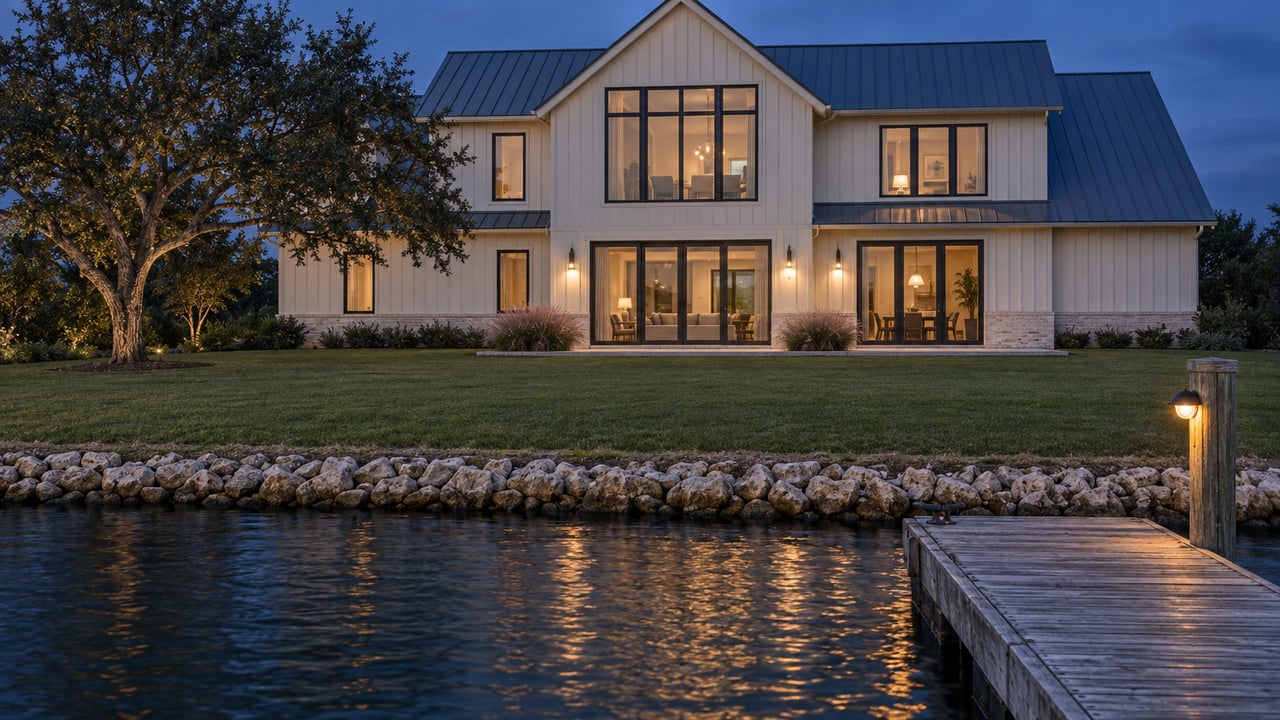
Living on a canal in Gulf Shores means the water is not scenery. It is the route to dinner, the driveway to the Gulf, the thing outside the back porch that changes a little every season whether or not you are paying close attention. Late summer, it turns out, is when it is paying the closest attention back.
If you are already living the Waterways lifestyle, or thinking about what it takes to make the marina, the boat slip, and this stretch of the Intracoastal part of your everyday routine, the Scarbrough Team at Waterways of the Gulf Shore is happy to talk through what that looks like day to day. Schedule a Consultation whenever you are ready to see it firsthand.